Mini excavators are popular among contractors and construction teams because of their versatility on the job site. You can use these machines in many projects, ranging from small landscaping jobs to road construction.
If you’re considering using a mini excavator for your next project, you’ll need to determine what you can use it for and how to operate it. This guide to mini excavators will help you decide if this equipment is suitable for your application and how to find the model that’s right for you.
What Is a Mini Excavator?
A mini excavator, also known as a compact excavator, is a heavy machine used for digging or demolition in construction projects. They’re handy for small to medium-sized projects when you don’t need a full-size excavator digger or trencher but still require high performance.
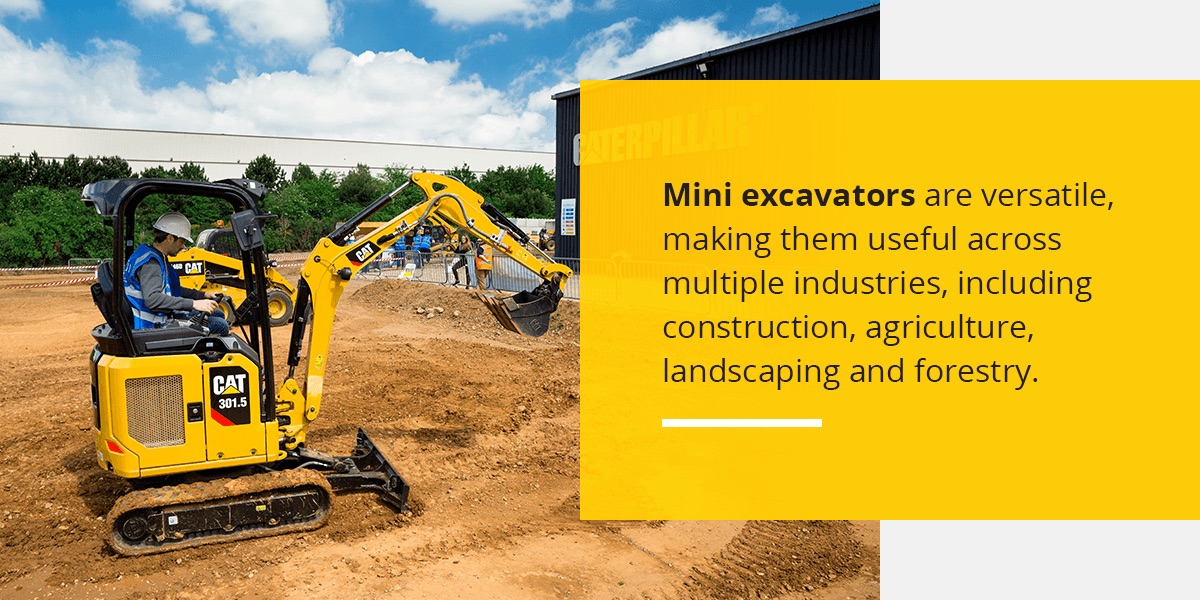
Mini excavators are versatile, making them useful across multiple industries, including construction, agriculture, landscaping and forestry. Some of their other benefits include:
Maneuverability: Mini excavators can get into difficult-to-reach spaces and around tight corners with ease. Thanks to their smaller construction and compact swing, they can go where full-size equipment can’t.
Ease of transport: Many models of mini excavators can fit on a trailer or pickup bed, making transport to various construction sites quick and efficient.
Lightweight frame: While full-size excavators can weigh between 30,000 and 40,000 pounds, compact excavators fall between 3,000 and 18,000 pounds. Their lighter weight makes them less likely to damage surfaces and structures they drive over, leading to less wear and tear over time.
Efficiency: Advanced hydraulics lend these smaller machines impressive power. Using a mini excavator can save fuel costs and minimize your carbon footprint.
Less noise pollution: Mini excavators are quieter than larger heavy equipment, so you’re less likely to get noise complaints from people near the job site.
Mini Excavator Parts
Understanding the main components of these machines can help you choose the right one for you, and even allow you to make minor repairs. Some of the main parts of a mini excavator are:
Cabin: The cabin is where the operator sits and accesses the operational controls. A mini excavator’s cabin allows 360-degree rotation and meets the Occupational Safety and Health Administration’s roll-over protective structures (ROPS) requirements.
Engine: A mini excavator’s engine supplies the power to move the hydraulic tracks and operate the arm and attachments.
Arm: Mini compactors feature a single arm. Various configurations provide more flexibility for different applications. For example, extendable arms can reach varying dig depths, while long arms provide a taller dump height.
Boom: A mini excavator’s boom has a compact swing, giving it a smaller work footprint than full-size equipment.
Attachments: Mini excavators frequently have a bucket. You can also fit your mini excavator with a straight or angled blade. Additional attachments include brush cutters, augers, rollers, compactor plates, rippers and hydraulic hammers.
Undercarriage: The undercarriage contains the gears and motor. Some models have a retractable undercarriage, allowing even greater maneuverability.
House: Located beneath the undercarriage, the house contains the excavator’s engine and fuel cylinders.
Tracks or wheels: Most mini excavators have rubber tracks with a width and track depth that allows the machine to access nearly any space. Other mini excavators have wheels, which offer better traction on roads and smoother terrain.
The various attachments for these small but mighty machines create a broad range of jobs you can do with a mini excavator. What you use a mini excavator for will depend on your industry and the job.
Check out these compact excavator uses to see if this piece of equipment might be right for you.
Dig Trenches
If you need to dig a trench within a certain depth, go for a mini excavator. This machine works great for sewer line repairs, irrigation ditches and foundations. Mini excavators can often perform the same jobs as a full-size machine like a trencher for a fraction of the price.
These machines make quick work of various plumbing and agriculture excavation jobs. Simply ensure the required depth of your trench is within a mini excavator’s reach and dig away.
Demolish Small Structures
Many construction jobs begin with removing small structures like sheds and barns from the site. You can use a mini excavator for demolition with excellent results.
A mini excavator’s compact frame makes it flexible enough to fit through narrow spaces, like inside a gate and around tight corners. You can also use a mini excavator’s bucket to load debris onto a truck when the demolition is complete.
Install Pools, Hot Tubs and Ponds
Since pool permit requirements vary between states, many homeowners and businesses turn to contractors for their pool installation. Mini excavators are an excellent tool for residential earthworks because of their maneuverability and power.
These machines are the perfect solution for installing in-ground pools and hot tubs. Mini excavators also do an excellent job with other kinds of in-ground installations like ground ponds.
Plow Snow
During colder months, city workers need all the help they can get to get roads clear and maintain safe driving conditions. While it may surprise you to learn that you can use mini excavators as snowplows, a special blade attachment can make them perfect for the job.
Mini excavators can drive over snow-covered roads to clear difficult-to-reach areas, making them helpful for plowing snow in winter.
Bore Holes
Mini excavators let construction teams save the time and labor of digging holes with shovels or hand tools. Mini excavators can access tough-to-reach spots and quickly dig holes for nearly any job.
These machines are also great at drilling for post holes, road signage, drainage and more. With an auger attachment, mini excavators can drill down into either soil or cement.
Install and Remove Trees
If you have a landscaping project, a mini excavator could be the perfect tool for installing or removing trees. This equipment is great at removing stumps, digging holes for tree transplants and more. Use the bucket to backfill over the tree’s root ball and a thumb grapple attachment to dig up stumps. You can also use this equipment to flatten the landscape and remove obstructions.
How Does a Mini Excavator Work?
As with other pieces of construction equipment, operating a mini excavator takes some practice and experience. It’s essential to follow a few basic steps when operating a mini excavator to make operation safe and effective. Here is an overview of how to use a mini excavator.
1. Train Professionally
The first step in learning how to use a compact excavator is training. As with any heavy equipment, operating one always carries a risk. A well-trained operator will be able to use the machine properly and minimize that risk, ensuring the job site is safe for everyone. Employers and independent training companies can provide training for those interested in operating these machines.
2. Perform a Safety Check
It’s vital to complete a safety inspection of the mini excavator before you operate it. Taking the time to look around the machine for loose or damaged parts can help you prevent dangerous situations.
As part of your safety check, remember to:
Read the operator’s manual: Ensure you’ve read the operator’s manual to familiarize yourself with the controls. You should also check for warning stickers around the machine to be aware of potential hazards and other safety instructions.
Check for leaks: Look for oil leaks on the ground around the cabin. Address any leaks before operating the equipment.
Inspect for damaged parts: Loose, damaged or missing parts could make safe operation impossible. Check for loose components like bolts, cables or hoses. Your mini excavator might need repairs before it is safe to operate.
Examine the tracks: Tracks should have the right amount of slack, as tracks that are too tight or loose can wear more quickly. Ensure the tracks are in good condition and that undercarriage components are all present and working.
3. Practice Driving on Tracks
It’s always a good idea to practice driving a machine before you take it onto the job site. Going for a practice drive helps you familiarize yourself with driving on tracks.
Once inside your mini excavator, fasten your seatbelt before turning on the ignition. Then test the tracks in a clear, level area.
In most mini excavators, the operator can control the right and left tracks separately to turn the machine. Mini excavator operators must get used to this limited range of motion to fully understand how to drive this piece of equipment.
4. Get Used to the Controls
Test the equipment to familiarize yourself with the controls during your practice drive. Once you start the engine, the control gauges and all lights should be fully functional. Check your controls and practice using them, including:
Control gauges: The control gauges tell you the engine’s temperature, fuel level, oil pressure and more. Keep an eye on these controls while driving.
Joysticks: The joysticks on the armrests control the bucket or other attachment, as well as the cabin rotation.
Steering levers: Pulling one of the steering levers at your feet will move the machine in that direction. Pushing it will move the machine the opposite way.
High-speed control: The left foot pedal is the high-speed control, which boosts the machine’s driving speed.
Two-way pedal: The right foot pedal is the two-way pedal. You can use this pedal to swing the bucket left or right while keeping the rest of the excavator in place.
Front blade control: The larger lever on the right side is the front blade control. You can use this lever to operate the mini excavator’s blade attachment for plowing or stabilizing the machine while digging.
Throttle: Another lever on your right side is the throttle, which increases engine speed. This lever is closer to the instrument panel.
5. Drive Carefully
While operating a mini excavator, always use caution and watch for hazards in your way. Keeping the front blade and attachments raised while driving will let you avoid hitting any objects.
It might take some practice to get used to the rotating cab and steering controls. Once you are acquainted with them, they can help you see clearly and move the boom in virtually any direction without having to back up.
What to Look for When Buying a Mini Excavator
You should keep several things in mind when buying a mini excavator. First, ask yourself, “What can I do with a mini excavator?” Prioritize the features you need for your specific application to ensure you choose the right piece of equipment.
Follow these tips for how to buy mini excavators.
1. Know Your Job Site Requirements
From residential landscaping projects to large-scale construction and road repair, a mini excavator is suitable for a broad range of jobs. However, it’s crucial to know exactly what you’ll need your machine to do before you purchase one. Making the right choice will ensure your equipment has a long life and maximizes productivity while on the job site.
Compare your needs with the specifications of each mini excavator. Determine whether you need any additional attachments and factor that cost into your considerations as well. Consider these features when comparing mini excavators:
Digging depth: The maximum dig depth ranges from 5 to 12 feet and dictates how deep of a trench your machine can create.
Operating weight: Mini excavators have an operating weight between 3,000 and 18,000 pounds. This qualifies them as compact equipment.
Dump height: Knowing the dump height is essential for materials handling jobs. Maximum dump heights range from 6 to 14 feet.
You’ll also need to meet the Environmental Protection Agency’s emissions limits, as well as any regulations specific to your state. For example, the California Air Resources Board has stringent emissions requirements for mini excavators and other diesel equipment.
2. Prioritize Safety
Purchasing a reliable machine from a trustworthy brand can maximize safety on the job site and improve performance. When looking for a safe mini excavator, look for these features:
Seatbelt: All construction equipment should have seatbelts or other forms of harnesses to protect the operator in case of a roll-over.
Safety interlock: Many mini excavators have a safety system called a safety interlock, which keeps the levers in the cabin locked. This prevents accidental movement of the machine while the operator enters or exits.
Ergonomic cabin: The operator’s comfort can aid them in handling the machine. When looking at mini excavators from a dealer, look for a comfortable cabin that reduces operator fatigue, eliminates distractions and provides high visibility.
3. Look for Full-Service Customer Support
Finding a dealer service team with superior product knowledge can help you purchase the right mini excavator for your job. Buying through a dealership with full-service customer support also provides benefits beyond the sale:
Maintenance and repairs: Over time, your machine will need routine servicing and parts replacement. Look for a dealer that offers complete customer service for everything from regular maintenance to extensive repairs.
Financing options: You can also benefit from financing options to help you expand your fleet and get to work faster.
Assistance meeting emissions regulations: A dealer with expert knowledge of California’s emissions regulations and a dedication to helping you meet those requirements can make a huge difference.
Choose Holt of California for Mini Excavators
At Holt of California, we provide superior equipment and services to help you get the job done. We assist before and after the sale, from helping you meet California’s emissions requirements quickly and efficiently to servicing Cat® machines and those outside of our carried brands. We’re committed to helping you build and maintain a reliable fleet you can depend upon for every job.
Our knowledgeable team is ready to help you find a mini excavator model to fit your needs. Browse our mini excavators online or contact us for more information about our compact equipment.