
Stockton Facilites look to reduce waste!
In April an analysis was performed on what types of waste were being disposed of and the amount of money …
Jul 19, 2010
2 MIN READ
California contractors face mounting operational pressures in 2026. Fuel costs continue to eat into project margins, skilled equipment operators are harder to find than ever, and California Air Resources Board (CARB) regulations keep tightening the compliance window. Meanwhile, customers expect faster turnarounds, tighter budgets and zero-defect work.
Nationwide, the construction industry is short by about 500,000 workers, and California feels that shortage acutely. When you can’t find experienced operators, projects slow down. When fuel prices spike, your bid estimates become outdated before the work can begin. When equipment sits idle or breaks down unexpectedly, the ripple effects hit your schedule, your crew and your bottom line.
The answer isn’t necessarily hiring more people or spending more money. It’s working smarter with the equipment you already have. That’s where new construction technology comes in — not as a luxury for large-scale operations, but as a practical tool that helps contractors of all sizes cut costs, improve safety and stay competitive in a challenging market.
Holt of California’s Technology Group brings proven Cat® technology solutions directly to project managers, operations managers and business owners. From GPS-driven grade control systems that reduce rework to telematics platforms that track fuel use across your entire fleet, these technologies address the specific challenges California contractors face every day.
The pressures California contractors face often compound each other. Challenges like rising fuel costs, a shrinking skilled workforce and increasing fleet complexity make technology adoption necessary, not optional. Contractors who can track fuel use across their fleet, reduce rework through precision grading and prevent unplanned downtime through better maintenance have a measurable competitive advantage.
Fuel remains one of the largest variable expenses for equipment-heavy operations. When diesel prices climb, every hour your machines run costs more, and idling equipment burns expensive fuel without adding any value to the project. Moving equipment and materials around the jobsite further increases costs.
Short-term fuel price swings also make accurate job bids harder to calculate. If fuel prices jump between the time you submit a bid and the time work begins, your margin shrinks before you turn a single shovel of dirt. Many contractors limit how long their price estimates remain valid before they have to requote, which creates pressure to close deals quickly or risk rebidding at lower margins.
Technology offers a direct lever on fuel spend. Telematics platforms show you which machines idle too long, which operators use fuel efficiently and where you can adjust schedules to reduce unnecessary run time. Grade control systems reduce the number of passes needed to reach the final grade, which means burning less fuel per task.
Understanding the hidden costs of equipment downtime and inefficiency helps contractors see where fuel waste compounds other operational problems.
The skilled labor shortage is more than a national headline — it’s an industry-specific pressure that affects how quickly you can staff projects and how confidently your crews can execute complex work. The gap between project demand and available qualified equipment operators continues to grow, and hiring experienced hands takes longer than it used to.
Fewer qualified operators mean critical tasks take longer to finish, which pushes deadlines out and increases labor costs. Inexperienced replacement crews often make more mistakes, which leads to rework and drives up the cost of corrective tasks. Training new operators to the same productivity level as veterans takes time you may not have when you have a long project queue.
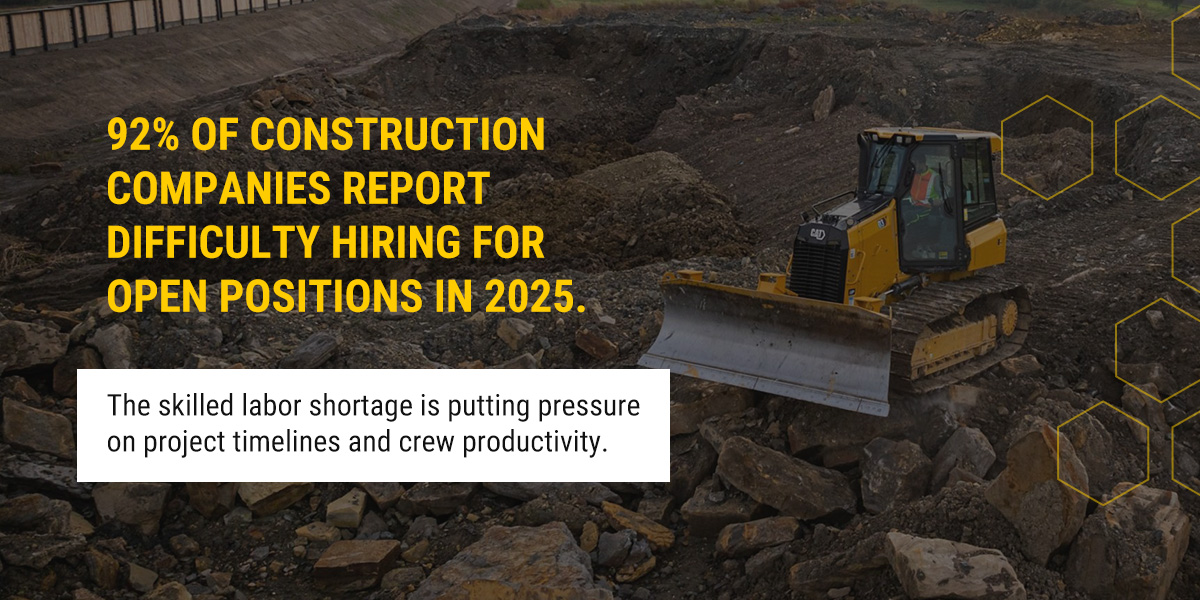
Research shows that 92% of construction companies report difficulty hiring for open positions in 2025. California’s construction employment outlook mirrors that challenge, with projected job growth outpacing the available workforce in key construction occupations.
Technology bridges that gap by making operators of varying experience levels more productive. Grade control systems guide less-experienced operators to accurate cuts without constant supervision. Cat Assist technologies automate repetitive tasks so newer operators can focus on the decision-making parts of the job. Telematics data helps you identify which operators need additional training and where coaching can improve performance across your crew.
California’s environmental regulations create real compliance obligations for contractors operating diesel-powered heavy equipment. CARB enforces strict emissions standards, and staying compliant requires attention to both the heavy material handling equipment you run and how efficiently you operate it.
CARB’s In-Use Off-Road Diesel Fleet regulations took effect January 1, 2024, establishing requirements for fleet owners to manage emissions from off-road diesel equipment. Looking ahead, CARB is proposing Tier 5 emission standards with implementation beginning as early as 2029, which will require even stricter nitrogen oxide and particulate matter reductions.
Understanding what the upcoming CARB regulations mean for equipment helps contractors plan for compliance timelines and equipment upgrades. The In-Use Off-Road Diesel Fleet requirements outline specific obligations for fleet owners across California.
You can navigate compliance with environmental regulations with the right equipment and operational strategies. Fuel-saving technologies reduce emissions as a direct by-product. Running newer Cat machines that meet Tier 4 Final standards keeps you ahead of the compliance curve. Holt of California helps contractors understand these requirements and choose equipment that meets both performance needs and regulatory obligations.
Unplanned equipment downtime carries two costs: the direct expense of repairs and the ripple effect on project schedules, labor utilization and contract commitments. When a machine goes down unexpectedly, your crew either waits idle or gets reassigned to less critical tasks. Either way, your timeline slips and your costs climb.
Fleet complexity makes the problem worse. Managing multiple machines across multiple jobsites means keeping track of maintenance schedules, parts inventory, fuel use and utilization rates for every piece of equipment. Without visibility into what’s happening across your fleet, you’re reacting to problems instead of preventing them.
The hidden costs of equipment downtime extend beyond repair bills. Poor equipment planning compounds inefficiency by creating scheduling conflicts, increasing rental equipment costs when backups are needed, and eroding crew morale when operators can’t complete their work.
The solution is about more than just fixing equipment faster when it breaks down — it’s predicting when a machine will fail before it happens. Planned maintenance reduces unplanned failures by addressing wear items and potential issues during scheduled service windows instead of mid-project. Telematics platforms monitor diagnostic codes and alert you to developing problems before they turn into breakdowns. Digital management tools help you schedule maintenance, track service history and keep your fleet running at peak reliability.
The Holt Technology Group is Holt of California’s dedicated Cat technology division, serving contractors across central and northern California. The Technology Group brings together every Cat-integrated and Cat-connected solution Holt of California offers under one local team. That includes on-machine technologies built directly into Cat equipment — like grade control systems, operator assist features and payload monitoring — as well as digital management tools that connect your fleet and give you operational visibility from anywhere.
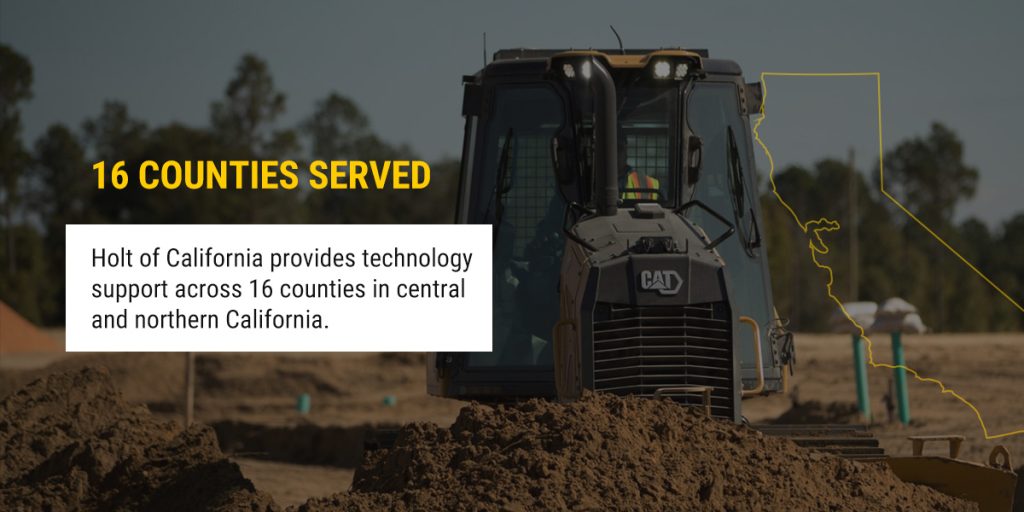
With Holt Technology Group, you’re getting a local team with expert support who understands California jobsite conditions, CARB compliance requirements and the specific operational challenges contractors in this region face. Holt of California has served central California for over 90 years and currently offers coverage across 16 counties, which means you have access to the same team for technology support that you rely on for equipment sales, parts and service.
The technology solutions available through the Holt Technology Group fall into several categories: technology-enabled Cat machines with factory-integrated systems, telematics hardware and software platforms, operator assist technologies, jobsite safety solutions and digital fleet management applications. Each solution addresses specific operational problems — fuel costs, labor shortages, safety risks, downtime and compliance — that California contractors manage every day.
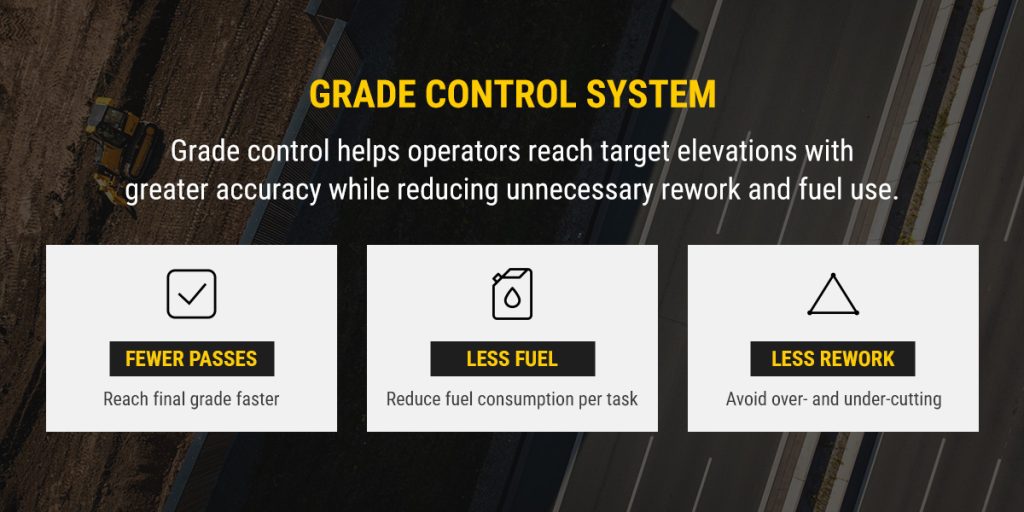
Grade control technology matters because accuracy drives profitability. Every extra pass you make to reach the final grade burns fuel, wears your machine and adds labor hours to the task. Rework caused by over-cutting or under-cutting materials costs even more. Grade control systems help operators hit target elevations in fewer passes, with less rework and with lower fuel consumption per task.
Holt of California offers both 2D and 3D grade control systems through the Holt Technology Group, and the right choice depends on your machine type and the complexity of the work you’re doing. Both systems make less-experienced operators more productive by giving them real-time guidance, which directly addresses the skilled labor shortage challenge.
Cat Grade with 2D is an indicator-only system designed for excavators. It gives operators real-time elevation and slope guidance displayed in the cab, helping them make precise cuts and fills without over-digging or under-digging. The system doesn’t control the machine automatically. Instead, it provides visual feedback so operators can adjust bucket position and achieve accurate grade faster.
The productivity benefits are measurable. Cat Grade with 2D helps excavator operators work up to 35% more efficiently, which means tasks that used to take a full day can be completed in significantly less time. That efficiency gain comes from reducing the number of passes needed to reach final grades and eliminating the back-and-forth communication with ground personnel who would otherwise check elevations manually.
Speaking of ground personnel, Cat 2D Grade systems reduce the need for crew members standing near the excavator to verify grade with laser levels or grade stakes. That’s both a safety improvement and a labor cost reduction. Operators of all experience levels can work more accurately with the system guiding them. This system helps contractors put newer operators to work productively while experienced operators focus on more complex tasks.
The system integrates with Cat Grade Control Systems and other technology-enabled machines available through Holt of California, giving you a range of options depending on your fleet and project requirements.
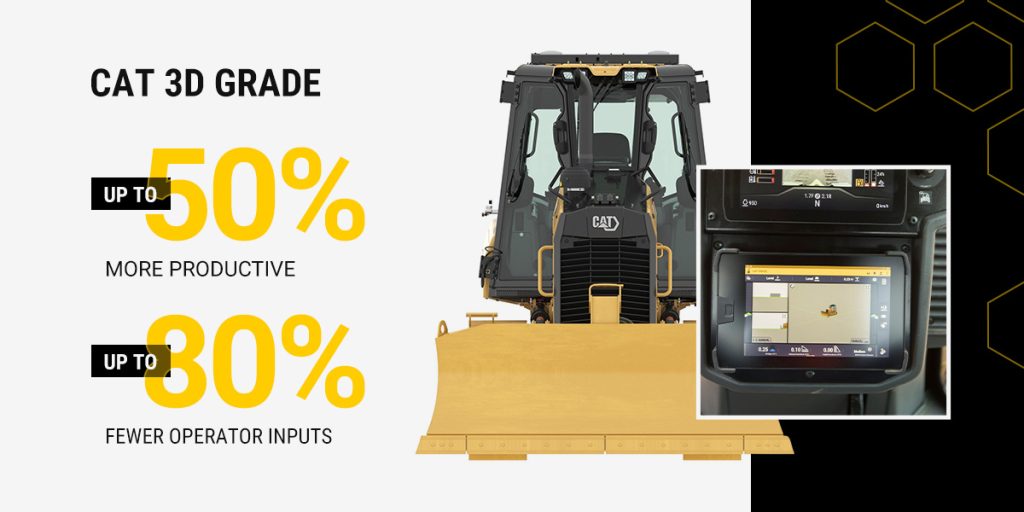
Cat Grade with 3D takes grading technology a step further by using GPS to automate blade movements. Instead of just indicating where the blade should be, the system actively controls the blade to match the design plan. Operators still drive the machine and make decisions about speed and direction, but the system handles the precise blade adjustments needed to reach final grades.
This automation delivers significant productivity gains. Cat Grade with 3D makes operations up to 50% more productive compared to conventional grading methods, which translates to faster project completion and lower labor costs per cubic yard moved. The system also requires up to 80% fewer operator inputs, reducing fatigue and allowing operators to focus on moving material efficiently rather than constantly adjusting blade angle and depth.
Cat 3D Grade is factory-integrated, which means no external masts or cables attached to the blade. That’s important for durability and accuracy — there are no external components to get damaged, knocked out of alignment or calibrated repeatedly throughout the day. The system is accurate to within 0.1 feet, which is tight enough for most site development, roadbuilding and earthmoving projects.
For California contractors working on complex grading projects with design plans that include multiple elevations, slopes and drainage requirements, Cat 3D Grade eliminates much of the guesswork. The system knows what the finished surface should look like and guides the blade to match it, reducing rework and keeping projects moving forward on schedule.
Knowing what your equipment is doing at all times, from anywhere, is one of the most powerful cost management tools available to contractors today. Telematics gives you a real-time picture of every machine in your fleet — where it is, how it’s being used, how much fuel it’s burning and whether it needs maintenance.
Holt of California’s telematics solution is built around VisionLink® and Product Link™, which work together to collect machine data and turn it into actionable information. VisionLink is the software platform where you view and analyze data. Product Link™ is the hardware device installed on your equipment that transmits data wirelessly to VisionLink.
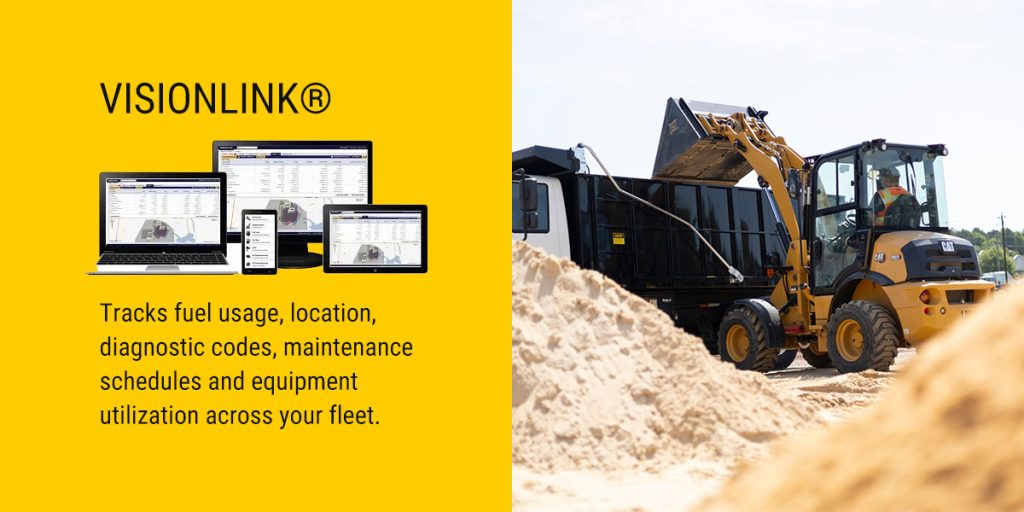
VisionLink is the fleet management platform that collects telematics data and extracts insights to help you manage your equipment more effectively. It tracks fuel usage, location, diagnostic codes, maintenance schedules and overall utilization across your entire fleet.
You can access VisionLink online or through a mobile app, which means you can check on your equipment from the office, from home or from another jobsite. That visibility matters when you’re managing a dozer in Stockton, two excavators on a Fresno subdivision, and a loader on a Bakersfield commercial site—all from your office in Modesto. You can use this data to make decisions about which equipment to deploy where, which machines are due for service and which operators are using fuel efficiently.
The data VisionLink provides directly addresses several industry pain points. Fuel usage reports show you which machines idle excessively and where you can reduce unnecessary runtime. Diagnostic codes alert you to developing maintenance issues before they turn into breakdowns. Utilization data helps you see which machines are working productively and which are sitting idle, so you can redeploy underutilized equipment or decide whether to rent additional capacity for a busy period.
VisionLink also helps with jobsite safety by identifying operator behavior patterns that indicate risks. The platform can flag unsafe actions even when you’re not physically present at the jobsite, which gives you the opportunity to act quickly to prevent accidents and identify training needs before incidents occur.
Product Link™ is the physical telematics device that plugs into Cat equipment and transmits machine data wirelessly to VisionLink. Think of Product Link™ as the hardware that collects the information, and VisionLink as the platform where you view and use that information.
Product Link™ transmits fuel usage, location and diagnostic codes from your equipment automatically. The device connects through cellular and satellite coverage, which means your machines stay connected even on remote jobsites where cell service is limited. You receive timely notifications of critical events via SMS text and email, so you know immediately when a machine throws a fault code or an operator triggers a safety alert.
One of Product Link™‘s key advantages is that it works on both Cat equipment and machines from other manufacturers. That mixed fleet visibility is important for California contractors who may operate a combination of Cat dozers, non-Cat excavators and rental equipment on the same project. Product Link™ lets you manage everything from a single platform instead of juggling multiple systems.
With Product Link™ installed across your fleet, data reports from your equipment transform into essential information that boosts asset performance, reduces operating costs and manages risk. The combination of Product Link™ hardware and VisionLink software gives you the equipment management services you need to run a more efficient operation.
The skilled labor shortage covered earlier creates a direct business problem: you need to complete projects with fewer experienced operators available to hire. Cat Assist technologies address that problem by making operators of all skill levels work with more confidence, speed and accuracy. This isn’t about replacing operators — it’s about making every operator on your jobsite more effective from day one.
Cat Assist technologies are on-machine systems built directly into the equipment. They help operators dig, load and grade more effectively by automating repetitive tasks, providing real-time guidance and preventing mistakes that would otherwise require rework. When you can bring newer operators up to speed faster and keep productivity high even when experienced operators are scarce, you maintain project schedules and control labor costs.
The range of Cat Assist technologies available through Holt of California covers different machine types and applications:
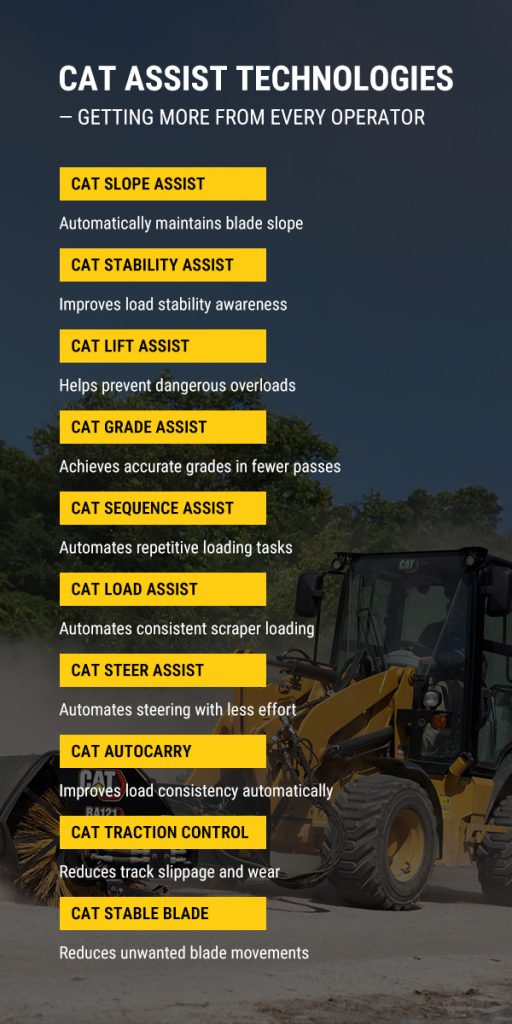
Each of these assist technologies reduces the skill level required to operate effectively. Contractors can bring newer operators up to speed faster, maintain productivity when experienced operators move to other jobs and keep projects on schedule even when the labor market is tight.
Jobsite safety is a moral obligation and a business reality. Accidents lead to delays, fines, workers’ compensation claims, increased insurance premiums and potential project shutdowns. Cat safety technologies available through the Holt Technology Group address safety proactively by using on-machine systems to prevent incidents before they happen.
Construction remains one of the most hazardous industries in the United States. In 2024, the rate for falls in the construction industry was 30 cases per 10,000 full-time workers, with these falls resulting in at least one day away from work. While falls represent one category of construction injuries, equipment-related incidents — including contact with overhead hazards, underground utilities and nearby structures — create significant risks on California jobsites.
Technology can prevent many of these incidents by creating automated boundaries that stop machine motion when operators approach hazards. The systems covered below protect both your crew and your equipment by preventing costly mistakes before they happen.
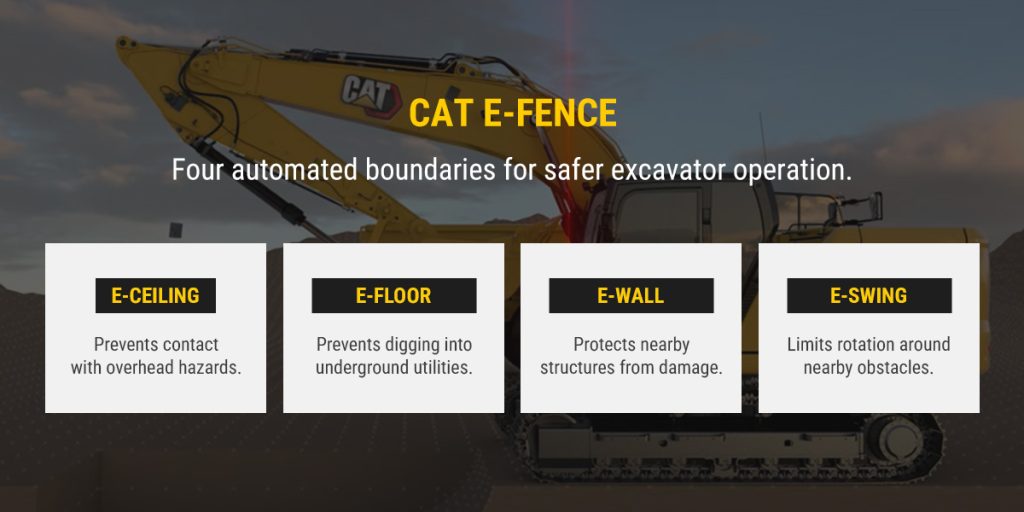
Cat E-Fence uses position sensor data to automatically stop motion when an excavator’s front linkage reaches defined boundaries. Cat 2D E-Fence keeps the front linkage within a predefined work area to avoid hazards like traffic, overhead power lines, underground utilities and nearby structures.
The system creates four types of protective zones:
The financial benefits go beyond safety. Cat E-Fence reduces jobsite fines from damaging underground utilities or structures, which can run into thousands of dollars per incident. The system also reduces operating fatigue and stress for operators who no longer have to constantly calculate clearances and worry about accidentally contacting hazards. When operators work with more confidence, productivity improves and mistakes decrease.
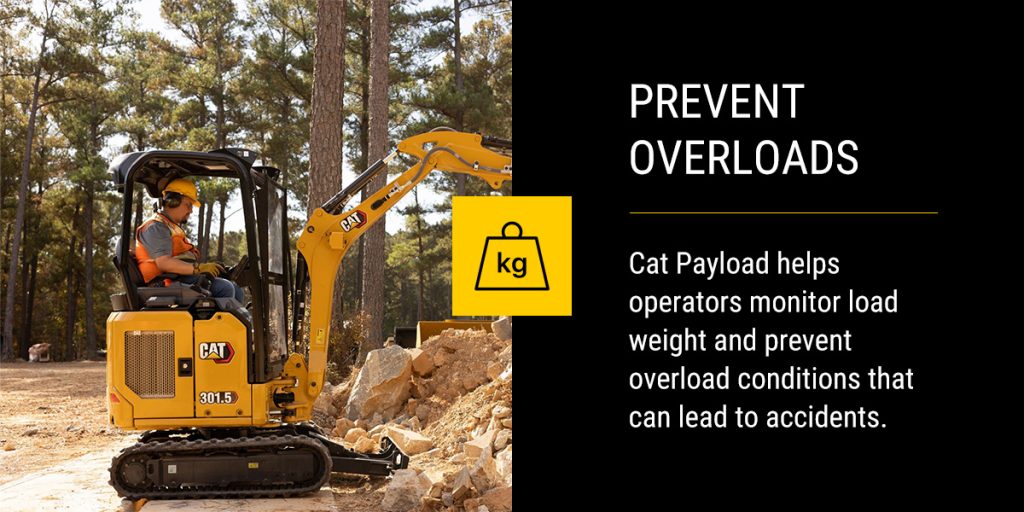
Safety technology extends beyond excavator boundaries. Cat Payload technology enhances operator effectiveness while preventing overload conditions that can cause accidents. Operators can see the amount they’re lifting and when they’ve reached hauler capacity, preventing overloading that could tip trucks or lose control on haul roads. Managers can track tonnage output on whatever time frame they need, giving them visibility into both productivity and safe loading practices.
VisionLink data plays a role in safety management as well. The platform can identify operator behavior patterns that indicate safety risks, such as excessive speed, harsh braking or operating outside designated work areas. You know when unsafe actions occur, even when you’re not physically present on the jobsite, which lets you act quickly to prevent accidents and identify training opportunities before minor issues become major incidents.
A safer jobsite is also a more efficient and more profitable jobsite. Preventing accidents keeps projects on schedule, protects your crew, reduces insurance costs and maintains your reputation with customers who value safety performance when awarding contracts.
Accurate loading helps protect equipment, improve fuel efficiency and support safer operations. Cat Payload technology solves both problems by giving operators real-time load data right in the cab, so they hit the target weight on every load cycle.
When it’s your job to load material, you need to know three things — what got loaded, how much went on each truck or into the hopper and where it went. Cat Payload technology delivers that information and keeps track of it over time. More importantly, it helps loader operators get the right load on board the first time, every time.
The system provides on-the-go weighing that tells operators exactly how much material is in the bucket or on the truck. This prevents overloads that stress truck frames, accelerate wear on suspension components and create unsafe operating conditions on haul roads. It also prevents underloads that mean you’re making more trips than necessary to move the same amount of material, wasting fuel and increasing cycle times.
Cat Payload technology applies to multiple machine types: excavators, wheel loaders in both L and M Series, as well as large loaders, articulated trucks and scrapers. That coverage means you can implement consistent loading practices across different parts of your operation and track production data from various machine types through a single system.
The back-office benefits matter as much as the in-cab guidance. Cat Payload tracks tonnage output by machine, operator and time period, which gives managers data to optimize operations and justify billing on jobs where payment is based on material moved. You can identify which operators consistently hit target loads, which machines deliver the best loading efficiency and where training or equipment adjustments can improve overall fleet performance.
Cat Payload enhances operator effectiveness while reducing fuel costs through more efficient loading cycles. Accurate loading means fewer passes, less rework and better utilization of both loading equipment and haul trucks. The system helps operators hit precise load targets every time, which directly improves your productivity and profitability per load.
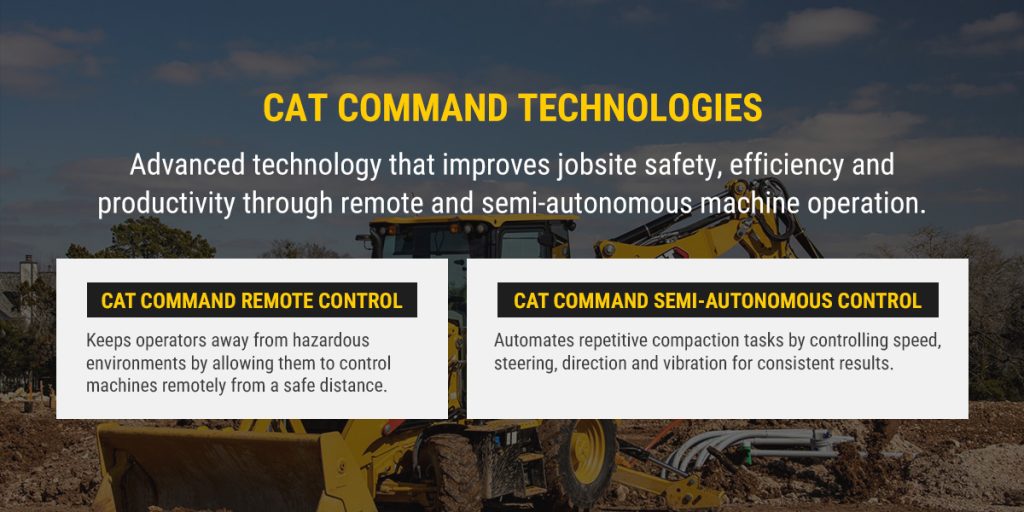
Cat Command represents the advanced end of the Holt Technology Group’s solution portfolio — remote control, semi-autonomous and fully autonomous machine operation. These technologies are particularly relevant for California contractors facing the labor shortage covered earlier and for operations where keeping operators out of hazardous environments improves safety.
The Cat Command technologies available through Holt of California include:
Cat Command technologies directly address two of the core challenges California contractors face: the skilled labor shortage and jobsite safety. By automating repetitive tasks or enabling remote operation, these systems reduce the number of operators needed for certain tasks and keep personnel out of hazardous environments. For compaction operations, long haul routes and dangerous jobsite conditions, Command technologies offer a practical way to maintain productivity while improving safety.
Understanding the role of technology in modern construction operations helps contractors see where automation and remote control fit into their broader operational strategy.
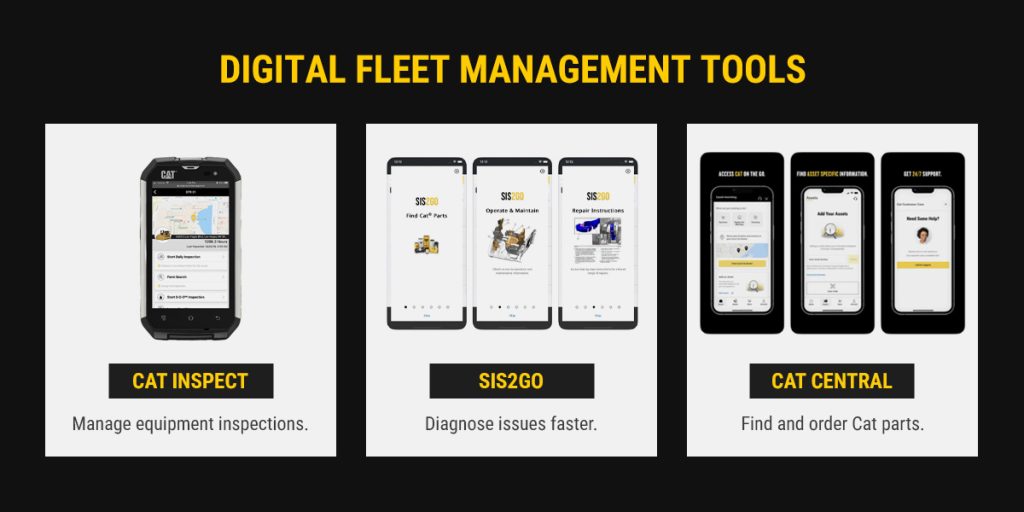
The technology covered so far focuses primarily on what happens on the machine: grade control, operator assist, payload monitoring and telematics hardware. Digital fleet management tools give you visibility and control over your entire operation, even when you’re not on the jobsite.
Holt of California’s digital tool suite connects to the equipment data generated by VisionLink and Product Link™ and turns it into actionable management intelligence. These applications run on mobile devices and desktop computers, which means you can manage your fleet from the office, at home or from another jobsite.
Each tool addresses specific management needs:
These digital tools connect back to the core pain points outlined in the challenges section. Cat Inspect supports planned maintenance, which reduces unplanned breakdowns. SIS2GO reduces downtime by helping your team troubleshoot issues faster and order the right parts immediately. Cat Central eliminates the delays and errors that happen when someone orders the wrong part or has to wait for a parts lookup.
Together, these applications provide the equipment management and planned maintenance capabilities you need to prevent downtime, control costs and keep your fleet running at peak reliability.
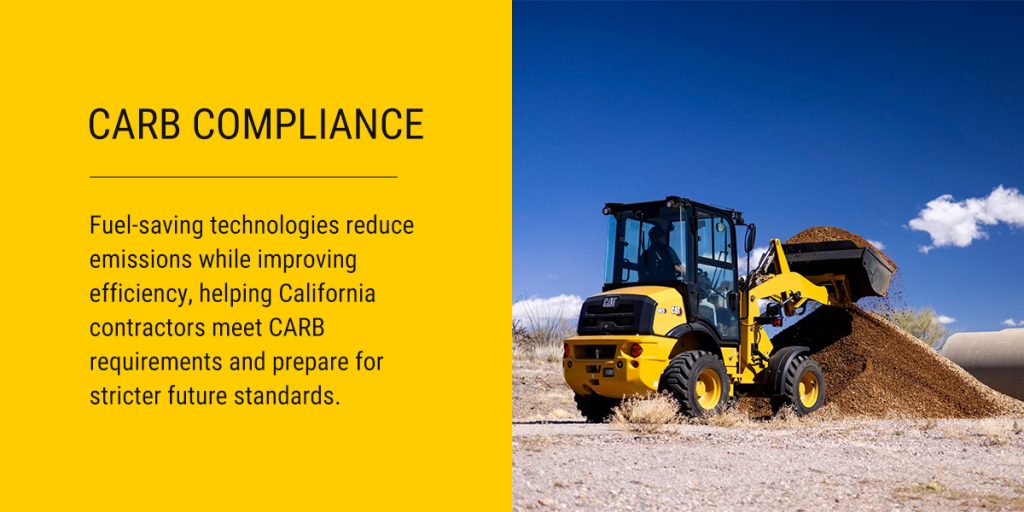
The CARB compliance challenge connects directly to these technology solutions. Fuel-saving technologies reduce operating costs and reduce emissions as a direct by-product. That connection makes technology adoption both an operational improvement and a compliance strategy.
Cat Grade Control Systems reduce the number of passes needed to reach the final grade, which means less fuel burned and fewer emissions produced per task. Cat Payload technology ensures optimal loading on every cycle, which reduces unnecessary trips and lowers fuel consumption across your hauling operation. VisionLink telematics identifies excessive idle time and inefficient machine operation, giving you data to adjust practices that waste fuel and generate unnecessary emissions.
These technologies can help California contractors meet fleet average emissions targets under CARB’s In-Use Off-Road Diesel Fleet regulation. The regulation requires fleet owners to manage emissions from off-road diesel equipment, and using technology to improve fuel efficiency directly supports that obligation.
Looking ahead, the looming CARB Tier 5 regulations will require even stricter emissions reductions beginning in 2029. CARB’s Tier 5 program targets significant nitrogen oxide reductions from off-road equipment. Working with properly equipped newer Cat machines that meet Tier 4 Final standards positions you ahead of the compliance curve. When Tier 5 takes effect in 2029, contractors still running older Tier 3 fleets will face a choice: expensive DPF retrofits that could be thousands of dollars per machine, or accelerated equipment replacement on compressed timelines.
Holt of California helps customers understand the latest emissions requirements and navigate compliance in a cost-effective way. The team can walk you through which equipment meets current standards, how operational technologies reduce your fleet’s overall emissions profile and what timeline makes sense for upgrading or replacing older equipment. This is practical guidance from a team that understands both the technology and the California regulatory environment.
Technology adoption today creates a more compliant, more efficient and more profitable operation tomorrow. The fuel you save, the emissions you reduce and the data you collect all contribute to meeting CARB obligations while improving your competitive position in the California construction market.
Technology helps contractors stay competitive, efficient and prepared for the future. It’s about more than keeping up with the competition — it’s about staying in business. California contractors who adopt the right tools today position themselves to win more bids, complete more projects, reduce operating costs and build safer jobsites tomorrow.
The Holt Technology Group offers the full spectrum of Cat-integrated technology solutions, from on-machine systems that make every operator more effective to digital platforms that give you complete fleet visibility. Whether you’re managing a small crew on residential sites or running heavy equipment across multiple commercial projects, there’s a technology solution that fits your operation.
Reach out to learn which technologies make the most sense for your operation. The team can walk you through how each solution works, what kind of ROI you can expect and how to get your crew up and running quickly. You can explore the full range of Cat technology solutions online or visit one of the Holt of California locations across the state for more information.

