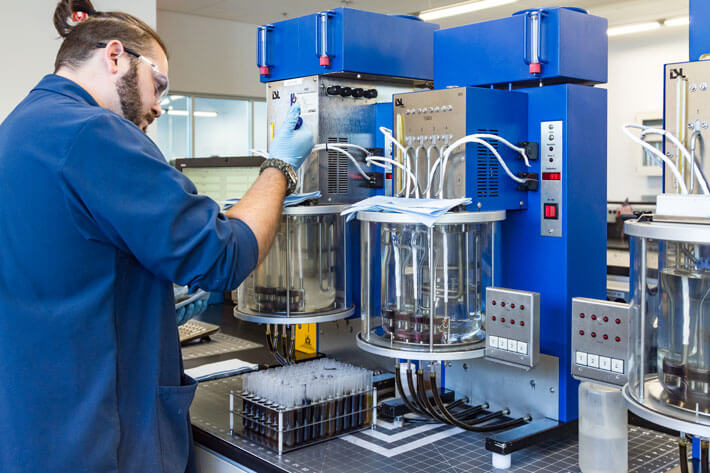
Es fundamental asegurarse de que el líquido refrigerante y los sistemas de refrigeración de su maquinaria funcionen correctamente para evitar un desgaste prematuro y averías inesperadas. Empire Fluid Lab ofrece dos niveles de análisis del líquido refrigerante.
Análisis del estado del refrigerante: Nivel 1 y Nivel 2
Entre los factores que se analizan en un análisis básico (Nivel 1) del líquido refrigerante se incluyen:
- pH: Los niveles anómalos de pH contribuyen a una serie de problemas en los sistemas de refrigeración de su equipo. Un líquido refrigerante con un pH bajo (más ácido) provocará un desgaste más rápido de los componentes del sistema de refrigeración, mientras que unos resultados de análisis con un pH alto (más alcalino) pueden indicar la presencia de contaminantes en el líquido refrigerante.
- Conductividad: La conductividad es un factor útil para identificar contaminantes en los líquidos refrigerantes, ya que constituye un aspecto importante en materia de seguridad para determinados equipos y aplicaciones.
- Nitrito: El nitrito está presente en la mayoría de los líquidos refrigerantes como aditivo que protege determinadas piezas contra la erosión y la oxidación. Los líquidos refrigerantes convencionales con niveles reducidos de nitrito deben sustituirse para garantizar el correcto funcionamiento de su equipo.
- Propiedades físicas: Además de los ensayos químicos, entre los factores que se analizan en un análisis del líquido refrigerante se incluyen el olor, el aspecto, el color y la presencia de precipitados.
El análisis básico del líquido refrigerante también incluye: punto de ebullición, punto de congelación, porcentaje de glicol, evaluación visual, formación de espuma y pruebas de presencia de aceite y combustible. Los clientes que necesiten un análisis más detallado del estado de su líquido refrigerante, que incluya mediciones químicas, del estado del sistema y de la calidad del agua, pueden optar por un análisis más exhaustivo de nivel 2.